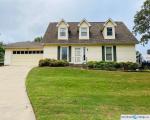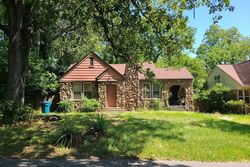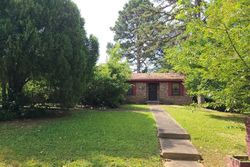
Our Arkansas foreclosure listings are updated regularly, featuring the latest Arkansas foreclosures for sale, and are suitable for any prospective buyer.

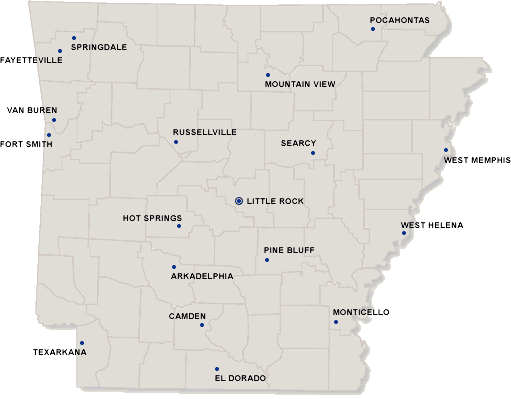
Search through the best listings of foreclosures in Arkansas. We provide foreclosed homes and auctions in the major Arkansas cities. Choose a city and fing an excellent deal for you!

Arkansas Foreclosures Offer Exceptionally Buyers Opportunities - Sep 13, 2011

Arkansas Foreclosures Represent a Positive Buying Opportunity for First Time Homebuyers - Jun 07, 2011

Arkansas Foreclosures: Still on the Rise in Most of the State - Feb 22, 2011

Real Estate Report Arkansas - May 25, 2010

Search and Invest in Cheap Foreclosures for Sale - Mar 03, 2010
» See all recent news
Current housing market trends in the state show enthusiastic statistics for property prices and Arkansas home foreclosures, with the average price of three-bedroom homes situated around $157,000. This is over $20,000 less when compared to how things were a year ago. Even more encouraging, Fayetteville, one of the state's major cities, is currently experiencing prices that are 5% less than those from the same time last year, with the growth in jobs contributing to reasons for buying or selling. Little Rock, the state's most populous city, is currently displaying a statistic of 30-35% for re-sales of Arkansas foreclosure homes, making now an attractive time for potential buyers of Arkansas homes.
Little Rock itself is a primarily agricultural region; they have much experience mass producing cotton, soybeans, rice, and many other crops. This level of agricultural production makes a significant impact on the exporting of goods and services internationally. This also remains true for many other parts of Arkansas, yet Little Rock is one of the most prominent sites overall. In terms of size, farmland encapsulates around 1/3 of the state's land, with a focus on livestock such as broilers and cattle, and rice being the most important crops in terms of production. The sector's influence spreads throughout Arkansas, with approximately a quarter of the jobs in Arkansas involving at least some level of agriculture.
Another important area of revenue for the state includes aviation. This industry's revenue has jumped dramatically over the past decade as a result of exporting spacecraft and aircraft internationally. Several local aviation companies are situated in Little Rock, which contributes to the state's expanding economic growth as well. Another financial sector applicable to the revenue increase is the retail industry. The most notable retail revenue generator is the main headquarters of Walmart, which is situated in Bentonville. The retail chain's international growth since the 1960s has obviously led to the company becoming an internationally renowned, successful, and instantly recognizable brand name. Along with the major retail outlets, other locally owned businesses in the service sector also contribute to the local community, including private health care services, hotels, and other small businesses.
Notable counties in Arkansas include: Benton, Craighead, Jefferson, Pulaski, and Washington counties, with each containing population of 50,000 or more. The general demographic of Arkansas currently estimates a population of about 2,889,450. Of this number, roughly 732,261 live in family households, with over three thousand of them accommodating five-bedroom homes.
In the state of Arkansas, both judicial and non-judicial foreclosures are available, and neither one is used more than the other. To begin a judicial foreclosure, a lender must file a Lis Pendens (pending lawsuit) against a homeowner found to be in default. The court then consults with the lender and determines how much the debtor owes to the lender. The homeowner is given a specific amount of time (usually about 30 days) in which they can pay off their debt to the lender. If the homeowner fails to do so, then the court can rule against the homeowner and put the property up for sale.
A non-judicial foreclosure can occur only if the mortgage agreement between lender and homeowner contains what is known as a "power of sale" clause. This allows the lender to foreclose on the property in default without consulting a judge beforehand. A non-judicial foreclosure begins when the lender files a notice of default with the county records office. This notice also can serve as a notice of sale, and usually lists the time and location of the foreclosure sale of the property. The homeowner can stop the foreclosure process at any point up until the day of the foreclosure sale by paying the amount owed to the lender.
Before either a judicial or non-judicial foreclosure sale can begin, the lender must fulfill two obligations. First, a copy of the notice of default must be mailed to the homeowner and published in a local newspaper. The newspaper advertisement must run once a week for four consecutive weeks, the final notice being published at least ten days prior to the sale. The lender is also required to have the property appraised before a sale can take place.
On the date of the foreclosure sale, the property is publicly auctioned off to the highest bidder. If the highest bid at the auction does not exceed two-thirds of the property's appraisal value, a second sale must be scheduled within 12 months. At the second sale, the property can be auctioned off to the highest bidder regardless of the appraisal value.
Once a winning bidder has been established at either the first or second sale, that person has ten days in which to pay off the full amount of their bid. After this occurs, the winning bidder is awarded full ownership of the property. In the case of a non-judicial foreclosure, the original homeowner retains no right to redemption once ownership has been awarded. However, a judicial foreclosure would allow the original homeowner to redeem ownership up to one full year after the date of the sale by paying the full sale price plus any additional interest gathered during that year.
To add this chart to your web page just copy the HTML and put it in your web page: