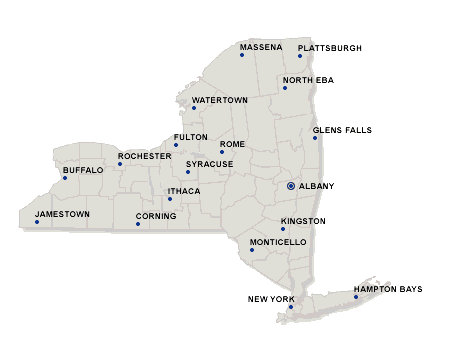

Foreclosures in New York can be both judicial and non-judicial, although judicial foreclosures are more common. A non-judicial foreclosure occurs when a mortgage contain a Power of Sale clause, allowing the lender to pursue foreclosure on a defaulted borrower (homeowner). In this case, the lender may schedule and carry out a foreclosure without obtaining a court order.
For judicial foreclosures, the lender must file a suit against the defaulted homeowner (known as a Lis Pendens). The homeowner is then required to appear in court to face the charges. If the court rules against the homeowner, a foreclosure sale may be scheduled for at least four months after the ruling. The homeowner can stop the foreclosure proceedings at any point up until the sale by paying off the default debt owed to the lender.
In order to inform the public, a Notice of Sale must be published in a local weekly newspaper for at least four weeks before the sale takes place. The sale is conducted in the style of a public auction at the county courthouse. Anyone may bid on the property.
The winning bidder must provide a ten percent deposit immediately and the remaining balance within 30 days before being transferred full ownership of the property. Under New York foreclosure law, the original homeowner generally retains no right to redemption once the sale has concluded.
| Mortgage Type | Today | Last Week | Change |
| 15 Year Fixed | 5.894% | 5.940% | -0.046% |
| 30 Year Fixed | 6.086% | 6.165% | -0.079% |
| 1 Year ARM | 4.545% | 4.934% | -0.389% |
| 3/1 Year ARM | 4.818% | 5.076% | -0.258% |
| 5/1 Year ARM | 5.024% | 5.328% | -0.304% |
© 1998 - 2008 Foreclosure Listings Corporation - Privacy Policy Terms and Conditions - Affiliates - Adsense Privacy Policy
The nations leaders in online real estate foreclosure listings information delivery.